ESA Technology Broker Spain
From Technology Transfer to Flight
ESA Technology Broker Spain Accelerates Europe’s New Space Innovators
Arkadia Space, Orbital Paradigm and Lofith Composite highlighted at ESA’s FLPP workshop demonstrate how technology transfer programmes are accelerating Europe’s next generation of launch technologies.
Europe’s next generation of space technologies is increasingly emerging from agile startups — and many of them are reaching operational maturity with the support of the ESA Technology Broker network, an European Space Agency program supported by the Spanish Space Agency.
Last week in Paris, during the industrial workshop of ESA’s Future Launchers Preparatory Programme (FLPP), several companies supported through ESA Technology Broker Spain, operated by Arribes Enlightenment and UPM, were presented as concrete examples of how targeted technology transfer programmes are accelerating innovation across Europe’s launcher ecosystem.
Among the companies highlighted were Arkadia Space, Orbital Paradigm, and Lofith Composite, each developing technologies that address key challenges for future space missions — from green propulsion and reusable re-entry vehicles to advanced composite materials.
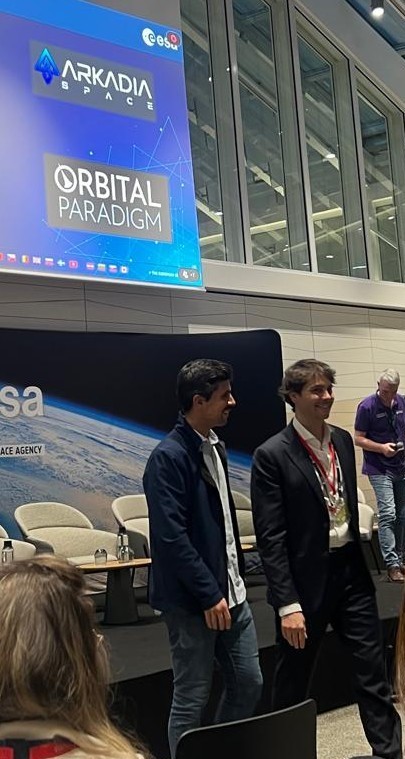
Their progress reflects the growing impact of ESA’s IP for Commercialisation (IP4C) programme, which supports companies in transforming intellectual property and technological know-how into viable industrial capabilities for the space sector.
“Europe has extraordinary technological talent, but transforming innovation into operational capability requires the right ecosystem,”explains the ESA Technology Broker Spain team.
“Our role is to help companies structure their technologies, protect their intellectual property and accelerate their integration into the European space market.”
Within ESA programmes, Arkadia has been developing propulsion systems including the ARIEL 250 N thruster, designed for launcher reaction control systems and supported through ESA’s Future Launchers Preparatory Programme. The company has already achieved major milestones, including the in-orbit validation of its propulsion technology, demonstrating the viability of hydrogen-peroxide propulsion for space vehicles.
Arkadia recently secured additional funding through the EIC Accelerator, reinforcing its industrial roadmap. The work carried out within the IP4C programme played a key role in helping the company mature its approach to IP protection, critical to structure its industrial strategy within the European launcher ecosystem.
“Green propulsion is no longer a future concept — it is becoming an operational reality. Our collaboration with ESA programmes is helping us bring safer and more sustainable propulsion systems to market,”said Francho Garcia, CEO of Arkadia Space.
Another company highlighted during the workshop was Orbital Paradigm, which is developing autonomous re-entry vehicles capable of returning payloads from orbit to Earth. Such vehicles are expected to play a crucial role in the emerging in-space economy, enabling the return of advanced materials, biological samples and other high-value products manufactured in microgravity.
Earlier this year, Orbital Paradigm conducted the first flight of its KID (Kestrel Initial Demonstrator) capsule. Despite a launch anomaly affecting the rocket, the spacecraft successfully survived the off-nominal mission profile and transmitted valuable flight data during atmospheric re-entry, validating key aspects of the vehicle’s design. Developed by a small team in roughly one year, the capsule demonstrated the ability to withstand extreme aerodynamic loads and thermal conditions while maintaining operational communications and telemetry.
“Through ESA Technology Broker Spain, we are defining our position within the emerging in-space logistics market, where reliable return capabilities will be key,”said Francesco Cacciatore, CEO of Orbital Paradigm.
The company continues its development under ESA programme Prepare for Space where ESA Technology Broker Spain supports the alignment of its technologies and its commercial positioning within the emerging in-space logistics market.
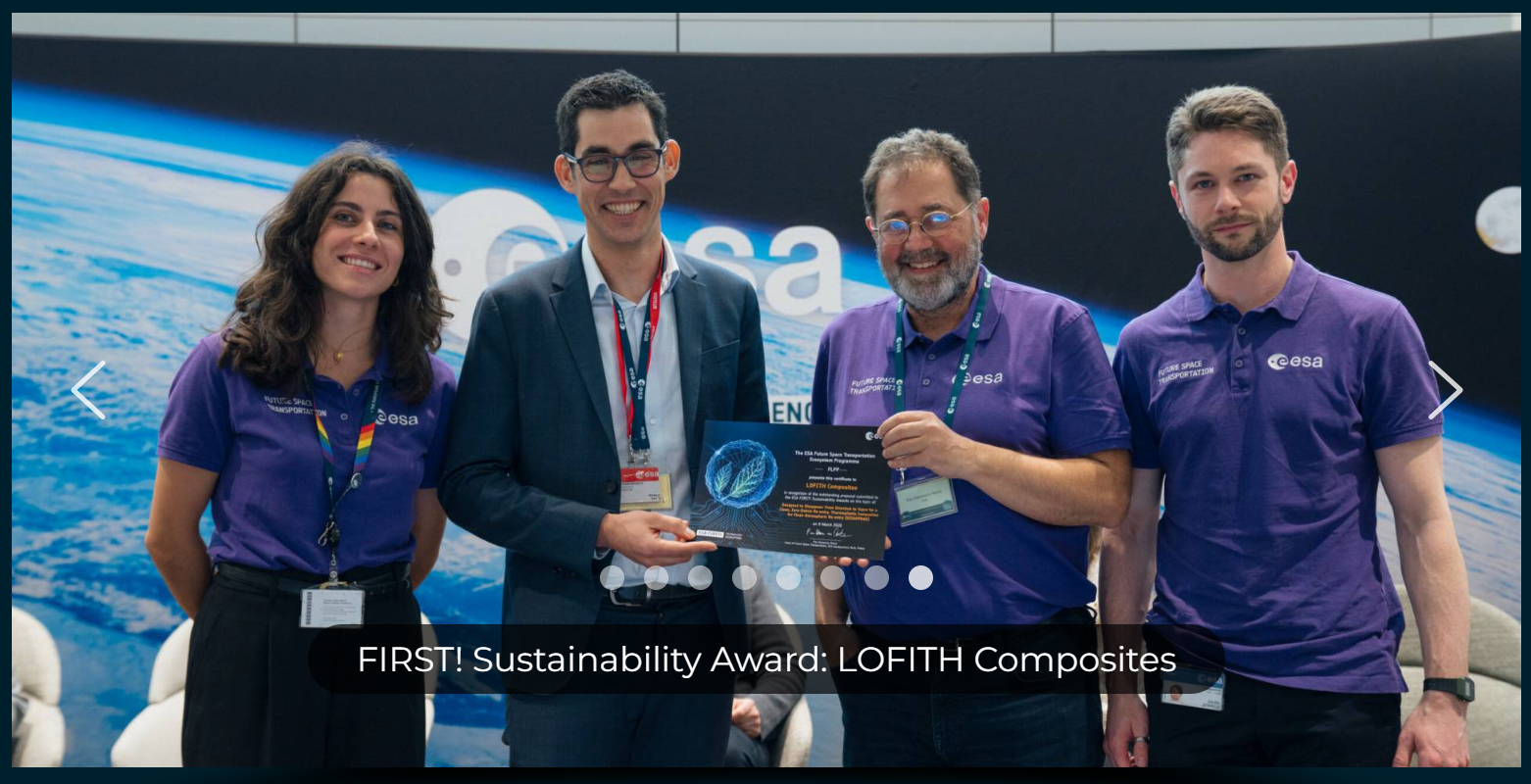
The impact of ESA Technology Broker Spain programmes also extends to advanced materials. Lofith Composite, a company specialising in thermoplastic composite materials, has been supported through Spark Funding and Prepare for Space, two initiatives designed to help companies adapt their technologies to the space sector and access space programmes.
“Entering the space sector requires more than advanced materials — it requires understanding the ecosystem, standards and processes. The support from ESA Technology Broker Spain has been key in enabling us to successfully position our technology within ESA programmes,”said Amador Garcia, CEO of Lofith Composite.
“Programmes such as Spark Funding and Prepare for Space have allowed us to adapt our composite materials to the demanding requirements of the space sector and open new high-value markets,”he added.
As a result of this process, Lofith was selected as one of five companies highlighted in the FLPP FIRST! Sustainability campaign, presented during the industrial workshop in Paris.
Together, these cases illustrate a broader transformation underway in Europe’s space sector. Through programmes such as IP4C, Spark Funding and Prepare for Space, the ESA Technology Broker network is helping bridge the gap between research, industrial innovation and operational space systems. Increasingly, the technologies emerging from these programmes are not just prototypes. They are becoming real industrial capabilities — and many of them are already flying. This news has also be published in Spanish Media, see the news at Infoespacial
More information
Contact us at esa-technology-broker@arrib.es to get additional information As ESA Technology Broker for Spain, we remain available to support Spanish entities in:
- Understanding programme positioning
- Identifying alignment with ESA priorities
- Exploring ESA intellectual property
- Structuring proposals or industrial strategies